Our Location
304 North Cardinal St.
Dorchester Center, MA 02124
Why do consumers "press the button" on your jar lids? We explore the physics behind vacuum-indicator lids—how they prove food freshness, provide tamper-evidency, and why XUZHOU TROY’s precision calibration is vital for retail success.
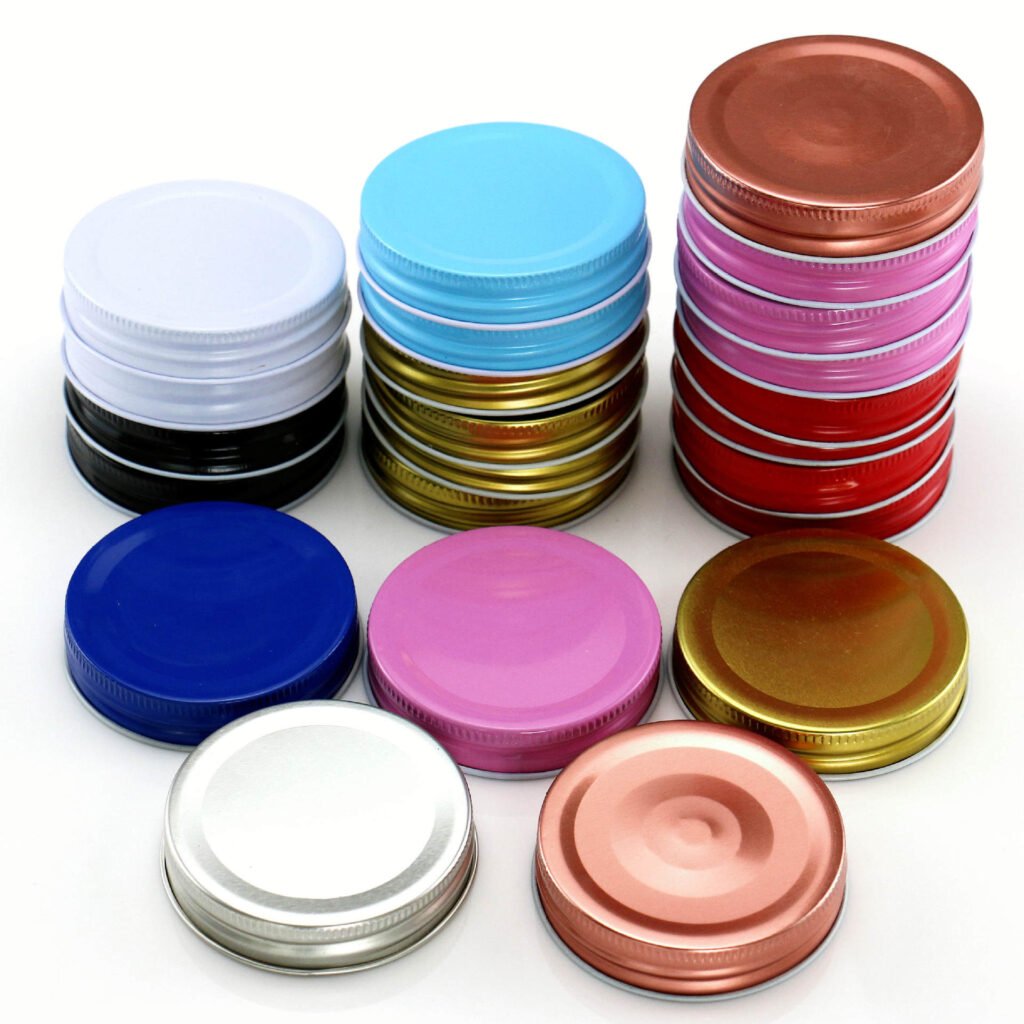
In a busy supermarket aisle, a consumer picks up a Mason jar of organic pasta sauce. Before looking at the price or the ingredients, they perform a subconscious ritual: they press their thumb against the center of the lid. If the lid is firm, they put it in their cart. If it makes a “clicking” sound, they put it back on the shelf.
At XUZHOU TROY, we know that this tiny circular indentation—known as the Safety Button or Vacuum Indicator—is the most important piece of communication between your brand and your customer. It is the visual and tactile proof that the food inside is fresh, sterile, and untampered with.
The safety button is a masterpiece of simple physics. During the Hot-Fill or Pasteurization process, the contents of the jar and the air in the headspace are heated, causing them to expand. Once the lid is applied and the jar begins to cool, the air inside contracts, creating a powerful internal vacuum.
This vacuum exerts a downward force on the lid. The safety button is engineered with a specific “spring tension” in the metal. When the vacuum reaches a certain threshold (measured in inches of mercury), it overcomes the metal’s resistance and sucks the button down into a concave position.
For B2B buyers and food manufacturers, the safety button serves two non-negotiable roles:
Tamper Evidency: If someone opens the jar in the store, air rushes in, the vacuum is lost, and the button immediately “pops” up. This provides an instant, irreversible warning to the next consumer that the seal has been broken.
Seal Integrity Verification: Sometimes a seal can fail during transit due to extreme temperature swings or rough handling. A raised button allows your quality control team and retailers to identify and remove “leakers” without having to open the jar.
Not all button lids are created equal. At our Xuzhou facility, we ensure the reliability of our safety closures through rigorous calibration:
Metal Gauge Precision: If the tinplate is too thick, the vacuum won’t be strong enough to pull the button down. If it’s too thin, the button might stay down even after the seal is broken. We calibrate the metal thickness to match the specific vacuum levels of industrial filling lines.
Plastisol Liner Quality: The button only works if the seal is air-tight. We use high-grade, BPA-free plastisol liners that create a hermetic seal against the glass rim, ensuring the vacuum is maintained throughout the product’s shelf life.
Compound Consistency: Our liners are engineered to withstand the high temperatures of steam-capping and water-bath processing without degrading or “melting” into the thread.
In the modern food industry, a “Safety Pop-up” is more than a feature—it is a liability shield.
Consumer Confidence: The audible “pop” when a customer first opens your jar at home is a powerful sensory cue that reinforces your brand’s commitment to quality.
Retail Compliance: Most major global retailers now mandate safety-button lids for any “hot-filled” shelf-stable products to minimize the risk of foodborne illness and consumer complaints.
At XUZHOU TROY, we provide the hardware that protects your software—the product inside. By combining precision-engineered glass jars with high-performance safety button lids, we ensure that your customers always hear that “sound of trust” when they open your product.
Are you transitioning from manual to automated filling? Make sure your lids are up to the task. Contact XUZHOU TROY for technical specifications on our vacuum-indicator closure systems.
CONTACT OUR TEAM >>