Our Location
Xuzhou, Jiangsu, China
Oxygen is the silent killer of food quality. We dive into the molecular science of why plastic "breathes" while glass provides a total oxygen barrier. Learn how choosing WETROYES glass Mason jars can help you achieve "Clean Label" goals and extend your product’s shelf life.
In the packaging industry, the greatest enemy of freshness isn’t time—it’s oxygen. For brands selling oils, fermented foods, premium sauces, or antioxidant-rich skincare, the ability of a container to block oxygen is the difference between a satisfied customer and a spoiled product.
While plastic (PET or HDPE) is often chosen for its low cost and weight, it fails in one critical scientific metric: Oxygen Transmission Rate (OTR). At WETROYES, we specialize in glass Mason jars because glass is the only mainstream packaging material that offers a “True Zero” barrier.
To the naked eye, a plastic jar looks solid. However, at a molecular level, plastics are polymers—long chains of molecules with microscopic gaps between them.
The Plastic Problem: Over weeks or months, oxygen molecules gradually migrate through these gaps (permeation). Simultaneously, the volatile aromas and essential oils of your product can “leak out” through the plastic walls.
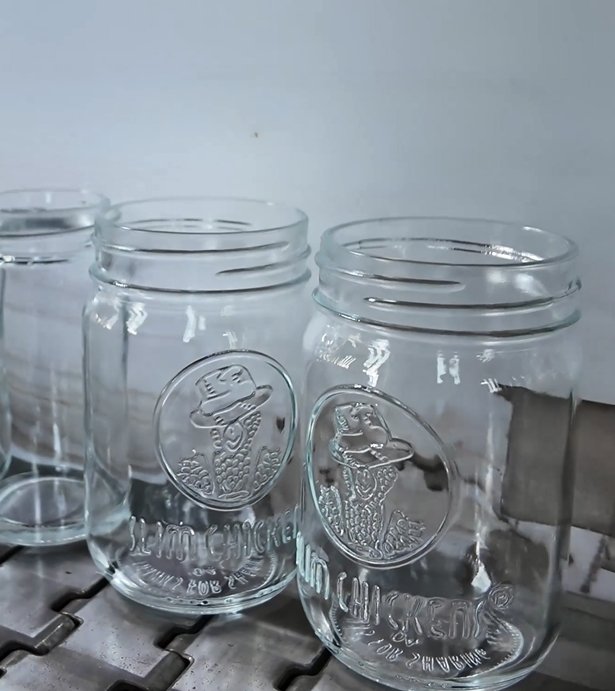
The Glass Advantage: Glass is an inorganic, non-porous material. Its atomic structure is so tightly packed that it is physically impossible for oxygen, carbon dioxide, or moisture to pass through the walls of the jar.
For B2B buyers, the “Zero OTR” of a WETROYES Mason jar is a powerful tool for product formulation.
Fewer Preservatives: Because glass prevents oxidation so effectively, brands can often reduce or eliminate artificial preservatives and antioxidants (like EDTA or BHT) from their recipes.
Clean Labeling: This allows your brand to market a “Clean Label” or “Preservative-Free” product, which is a high-growth segment in the US and European markets.
In industries like specialty coffee, honey, or high-end infusions, the “Organoleptic” profile (scent and taste) is the product’s soul.
Flavor Scalping: Plastics are known for “flavor scalping,” where the plastic absorbs the flavor compounds from the food, leaving it tasting flat.
Inert Storage: Glass Mason jars are chemically inert. They do not absorb odors, and they do not release a “plastic” taste into the product. This ensures that the customer experiences the exact flavor profile intended by your R&D team.
The “Zero OTR” of glass is only effective if the closure is equally perfect. At our Xuzhou facility, we ensure that the Rim Precision (as discussed in our previous articles) and the Lid Liner Quality work in harmony with the glass walls.
Hermetic Sealing: By providing perfectly flat sealing surfaces, we ensure that the “Total Package OTR” remains as close to zero as possible.
Vacuum Retention: Our jars are engineered to maintain a vacuum for years, providing a shelf-life that plastic simply cannot match.
Beyond protection, glass Mason jars offer a “second life” value. Because they do not degrade or absorb chemicals, consumers are far more likely to reuse a WETROYES jar than a plastic one. This extends your brand’s presence in the consumer’s kitchen long after the product is gone.
When you choose a WETROYES Mason jar, you aren’t just buying a container; you are buying a Time Machine for your product’s freshness. By eliminating oxygen transmission, we help our B2B partners deliver a superior, more natural, and longer-lasting product to the end consumer.
Is oxygen stealing your product’s flavor? Upgrade to the absolute barrier of WETROYES glass. Contact us today for a shelf-life compatibility consultation.
CONTACT OUR TEAM >>