The “Ouch” Moment: Why Your Plastic Lids Shouldn’t Have Sharp Teeth

Plastic lids are supposed to be the safe, rust-free alternative, but "Injection Flashing" can make them dangerously sharp. We’re exploring the hidden flaws in plastic molding that cause scratches and leaks, and how XUZHOU TROY ensures a butter-smooth twist.

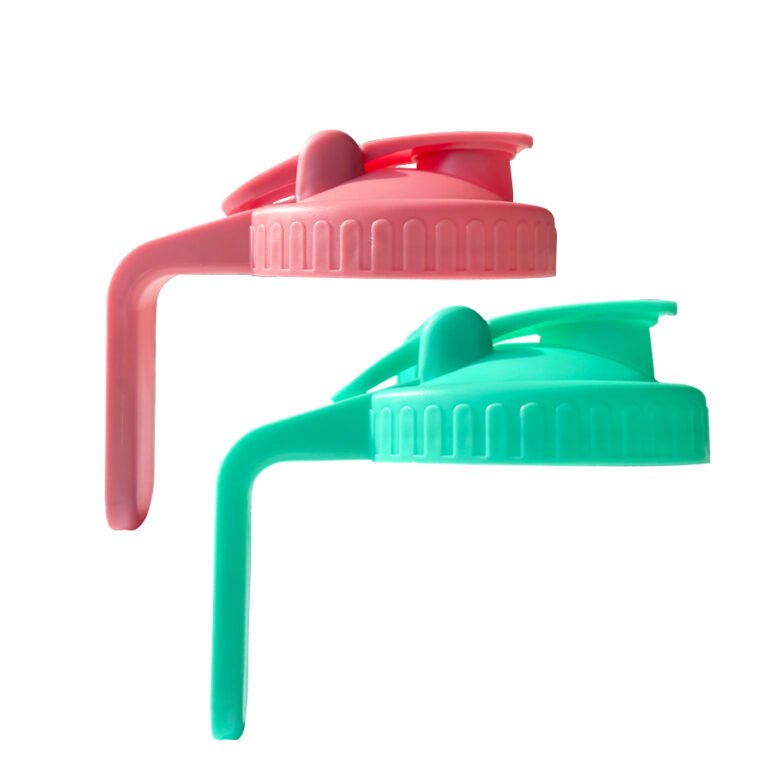
You’ve made the switch. You’ve told your customers, “Forget the rust! These colorful plastic lids are dishwasher-safe, leak-proof, and built to last.” You feel good about it. No more orange rust stains on the kitchen counter.

Then, you get a 1-star review. It’s not about a leak. It’s not about the color. It’s a photo of a customer’s thumb with a tiny, angry red scratch. Underneath, it says: “The threads on this lid are like razor blades. I cut myself just trying to close my jar.”

At XUZHOU TROY, we call this the “Thread Burr” (or Flashing), and it’s the silent hallmark of a factory that’s rushing their machines to save a few pennies.

What Exactly is "Flashing"?

In the world of plastic injection molding, two halves of a steel mold press together, and molten plastic is “shot” inside.

  • The Problem: If the mold is old, poorly maintained, or if the clamping pressure is too weak, a tiny bit of liquid plastic escapes the “seam” and seeps into the threads.

  • The Result: When the plastic cools, it leaves behind a microscopic, paper-thin “fin” of hard plastic. It’s almost invisible to the eye, but to a human finger twisting a lid with 20lbs of pressure, it acts like a serrated knife.

The "Taco" Effect: The Warping Trap

There’s a second headache with cheap plastic lids: Warping.
Factories often try to speed up their “Cycle Time.” They want to pop the lids out of the mold as fast as possible.

  • The Sabotage: If the plastic is popped out while it’s still too hot, it cools unevenly in the open air. The lid “shrinks” at different rates, turning that perfectly flat circle into a very subtle “Taco” shape.

  • The Failure: You won’t see the warp until you try to seal a jar of liquid. One side of the lid is higher than the other. The gasket doesn’t touch the glass. Suddenly, your “leak-proof” lid is a “leaker.”

The "Table-Tap" Test

How do you catch a “Taco” or a “Burr” before you ship? You don’t need a lab. Try the Table-Tap Test.

Take a sample lid and set it face-down on a perfectly flat surface.

  1. For the Warp: Tap the edges of the lid with your finger. If it clicks or “rocks” back and forth like a wobbly table, it’s warped. That lid will leak.

  2. For the Burr: Run your pinky finger slowly along the internal threads.

    • A high-quality lid from XUZHOU TROY will feel like a smooth, rounded wave.

    • A “Burr” lid will feel “snaggy” or sharp. If it catches your skin, it’s going to catch your customer’s skin, too.

Why We Obsess Over "Dwell Time"

At XUZHOU TROY, we don’t rush the mold. We use high-precision, Cold-Runner Molds that ensure the plastic stays in the “steel hug” of the machine until it is structurally stable.

We also use 100% Virgin BPA-Free PP. Many “budget” factories use “re-grind” (recycled scrap), which shrinks unpredictably and is much more likely to create those sharp burrs. By using pure material and giving the plastic the “Dwell Time” it needs, we deliver lids that are smooth to the touch and perfectly flat.

Plastic was supposed to be the “easy” upgrade. Don’t let a factory’s “Speed-over-Safety” mindset turn your rust-free dream into a sharp-edged nightmare. Your customers should be able to open their jars without needing a band-aid.

Tired of sharp threads and wobbly plastic? We hear you. At XUZHOU TROY, we make sure our plastic lids are as smooth as they are stable. Let’s get you some samples that actually pass the Table-Tap Test.

CONTACT OUR TEAM >>