Our Location
304 North Cardinal St.
Dorchester Center, MA 02124

This article explores the common failure modes of plastic Mason jar lids, including temperature cracking, stress cracking, thread stripping, and odor absorption. It provides practical guidance on which products work well with plastic lids and which require alternative materials, helping buyers make informed packaging decisions based on real-world usage conditions rather than catalog promises.
Let me tell you about a hot sauce maker who learned the hard way.
She switched to plastic lids because they were cheaper and lighter. Everything seemed fine for months.
Then winter came.
Her jars sat in a cold warehouse for two weeks. Then they were loaded onto a truck. Then they sat on a customer’s cold porch for a few hours. Then they came inside to a warm kitchen.
Crack. Crack. Crack.
Dozens of lids cracked right around the edge. Not all of them. Just enough to cause a flood of customer complaints and returns.
She called us, frustrated and confused. “They said these lids were food-grade,” she said. “They didn’t say they’d break.”
Here’s what nobody told her: plastic lids hate temperature changes.
And that’s just one of the headaches that plastic Mason jar lids can cause.
Let me be upfront.
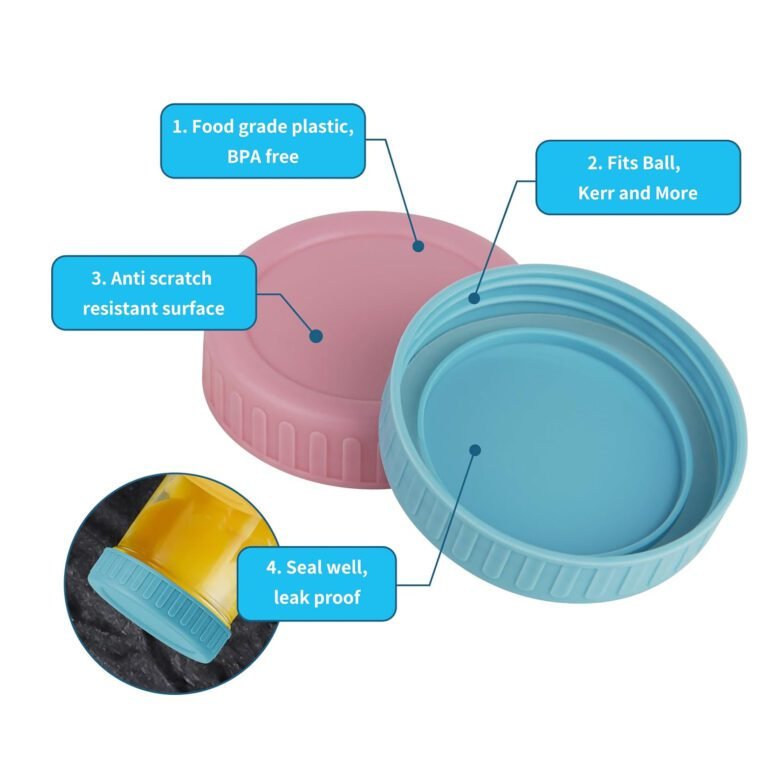
Plastic lids are great for some things. They’re lightweight. They don’t rust. They’re affordable. They come in fun colors.
But they also fail in ways that metal lids never do. And most buyers don’t learn about those failures until it’s too late.
What happens: Plastic expands and contracts with heat and cold. Metal and glass do too — but at different rates.
When a plastic lid is screwed onto a glass jar, both materials are trying to move. But they move differently. Glass is rigid. Metal flexes. Plastic? Plastic gets stressed.
Add a 30-degree temperature change? That stress turns into a crack.
What products are at risk:
The fix: Look for polypropylene (PP) lids, not polystyrene. PP handles temperature changes much better. Better yet, ask your supplier for their lid’s temperature range in writing.
What happens: You screw on a plastic lid. It’s tight. It feels secure.
But inside the plastic, there’s stress — invisible, microscopic tension from the manufacturing process.
Over time — weeks or months — that stress slowly grows. Tiny cracks form. They spread. One day, your customer opens the jar and the lid splits in half.
What products are at risk:
The fix: Annealed or stress-relieved plastic lids. The same concept as glass annealing — controlled cooling after molding to release internal stress. Not all suppliers do this.
What happens: Plastic threads are softer than metal threads. Every time someone screws the lid on, the threads wear down a tiny bit.
After 20, 30, 50 opens, those threads are worn smooth. The lid still looks fine. But it doesn’t seal anymore.
What products are at risk:
The fix: Metal threads molded into plastic lids (over-molding). Or accept that plastic lids have a limited lifespan and design accordingly.
What happens: Plastic is porous at a microscopic level. Not porous enough to leak liquid. But porous enough to trap smells.
Garlic hot sauce? Curry spice blend? Pickled anything?
Your plastic lid will smell like that product for the rest of its life. Even after washing. Even after soaking.
What products are at risk:
The fix: Don’t use plastic lids for strong-smelling products. Or accept that the lid is single-use.
| Product Type | Works Well? | Why |
|---|---|---|
| Dry spices (mild) | ✓ Good | Low stress, low smell, low temperature risk |
| Powders (protein, supplements) | ✓ Good | Dry, low stress, easy to clean |
| Coffee beans | ✓ Good | Dry, low stress |
| Sauces (room temp) | ⚠️ Caution | Acidity can degrade some plastics |
| Nut butters (thick) | ⚠️ Caution | High torque = thread stripping risk |
| Hot sauce (garlic, spicy) | ✗ Avoid | Odor absorption, acidity |
| Pickled products | ✗ Avoid | Acidity + temperature changes + odor |
| Anything frozen | ✗ Avoid | Temperature cracks |
| Anything shipped in winter | ✗ Avoid | Temperature cracks |
Before you buy plastic lids, ask these questions:
“What plastic material are these made from?”
“Are your lids stress-relieved after molding?”
If they don’t know what this means, find another supplier.
“What’s the temperature range?”
Get a number. -10°C to 50°C? -20°C to 80°C? Make sure it matches your shipping and storage conditions.
“Can I get samples to freeze and heat test?”
Do this. Fill jars, freeze them, microwave them (not the lid, just test temperature changes). See what cracks.
“Do these lids absorb odors?”
An honest supplier will tell you yes for some plastics. A dishonest supplier will dodge the question.
Choose plastic lids when:
Avoid plastic lids when:
We offer both plastic and metal lids. We’re not trying to sell you one or the other.
But we are trying to help you choose the right one.
Our plastic lids:
What we won’t do: Tell you plastic lids are perfect for everything. They’re not. And we’ll be honest about their limits.
Plastic lids are like plastic everything else: convenient, affordable, and good enough for some jobs.
But they fail in ways that metal lids don’t. Temperature cracks. Stress cracks. Stripped threads. Absorbed odors.
If your product is dry, mild, and temperature-stable? Plastic might be perfect.
If your product is acidic, smelly, or shipping through winter? You’re asking for trouble.
Choose based on how your product actually lives — not how you wish it would.
Not sure if plastic is right for your product?
We’ve seen plastic lids fail in ways you wouldn’t believe.
[Talk to our team] and tell us what you’re packaging. We’ll help you choose the material that survives real life — not just the catalog photo.