Our Location
304 North Cardinal St.
Dorchester Center, MA 02124

At Xuzhou Troy, we value every partnership, from a budding artisanal brand to an established global player. A common question we receive from valued clients like you is: “Why is there a Minimum Order Quantity (MOQ)?”
We believe that a strong partnership is built on transparency. Understanding the “why” behind MOQ helps us align our goals and build a more efficient, sustainable supply chain together. This article breaks down the key reasons behind MOQs for different types of our soda-lime glass packaging.
When you request a custom-shaped jar or bottle, you’re not just ordering glass—you’re commissioning a unique identity. This process involves significant upfront investment.
The Mold Itself: Each custom design requires a brand-new, precision-engineered mold made from high-grade steel. This is a complex and costly process, often costing thousands of dollars.
The R&D Process: Our engineering team spends considerable time testing the mold to ensure it produces jars with consistent wall thickness, a perfect finish, and structural integrity. This involves multiple sampling rounds and adjustments.
Production Line Reconfiguration: Setting up the production line for a custom mold is a meticulous process. It requires halting other production, calibrating machinery, and running initial tests, which consumes both time and resources.
Our Perspective at Xuzhou Troy: The MOQ for a custom mold allows us to amortize these substantial initial costs over a larger quantity, making the unit price viable for your business. It’s an investment in your brand’s unique footprint, and we are here to ensure it’s done right.

Creating your unique design requires a significant initial investment in precision tooling.
Even for our stock items (like our classic Mason jars), we have production MOQs. Why?
Manufacturing Efficiency: Glass manufacturing is a continuous, high-temperature process. Starting and stopping the furnace for small batches is energetically and economically inefficient. A production run for a specific item needs to be long enough to justify the energy consumed and the labor required.
Quality Consistency: A sustained production run allows the process to stabilize, ensuring that every jar from the first to the last has the same clarity, strength, and dimensions. Small batches can lead to inconsistencies.
Economic Viability: Running a full-scale manufacturing facility involves fixed costs. Larger orders allow us to operate sustainably and offer you a competitive unit price.
Our Eco-Conscious Commitment: By optimizing production runs, we significantly reduce our carbon footprint per unit. Larger batches mean less frequent furnace relining and more efficient use of energy, aligning with our commitment to planetary health.
You might wonder why there’s an MOQ even for our ready-made items. The answer lies largely in transportation.
Container Utilization (FCL vs. LCL): Shipping glass by sea is most cost-effective and secure in a Full Container Load (FCL). An FCL is a sealed, self-contained unit that minimizes handling and the risk of damage.
FCL (Full Container Load): Your goods are the only ones in the container. It’s sealed at our facility and opened at your warehouse. This is the safest method for fragile glass.
LCL (Less than Container Load): Your goods are consolidated with other shippers’ cargo. This involves more handling at multiple points, dramatically increasing the risk of breakage and loss.
Our Guidance for You: The MOQ for stock items is typically set to fill a container optimally. This isn’t just about cost; it’s our commitment to ensuring your products arrive in the same pristine condition they left our factory. We prioritize the safety of your order over everything else.
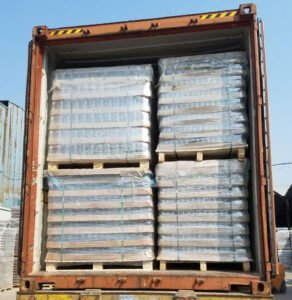
Opting for FCL shipping is the most secure way to protect your fragile glass investment during transit.
For processes like silk printing (for your logo) or color spraying, we often set an MOQ, commonly starting at 5,000 units.
Setup and Calibration: Each decoration run requires a precise setup. For silk printing, this involves creating and aligning screens for each color. For spraying, it requires masking, cleaning, and calibrating sprayers. This setup time and cost are fixed, regardless of whether we decorate 100 or 5,000 jars.
Material Waste Minimization: Inks and paints have a “pot life.” Running smaller batches leads to disproportionate material waste. A reasonable MOQ ensures efficient use of materials, which is both cost-effective and environmentally responsible.
Labor Intensity: The decoration process is often more labor-intensive than the primary glass forming. Achieving a stable, efficient workflow requires a continuous run.
Blending Craft with Care: This MOQ allows our skilled artisans to perfect the application of your brand’s identity. It ensures the color is vibrant and the logo is sharp on every single jar, turning a simple container into a powerful brand ambassador.
At Xuzhou Troy, we see MOQs not as barriers, but as the foundation for responsible manufacturing. They enable us to:
Deliver Consistent Quality you can rely on.
Operate Sustainably by maximizing energy and material efficiency.
Offer Competitive Pricing that helps your business grow.
Ensure Safe Transit for your products across the globe.
We are always here to have an open conversation about your needs. Let’s work together to find the most efficient and effective path to bring your packaging vision to life.
Have more questions about MOQ or ready to start your project?
REQUEST FREE SAMPLES NOW >>
CONTACT OUR TEAM >>
FIND MORE PRODUCTION VIDEOS >>