The “Sticky” Sabotage: Why Your Gasket Shouldn’t Stay Behind

A torn gasket is a "yuck" moment for your customers. We’re diving into the "Sticky Sabotage"—the manufacturing flaw in lid curing that ruins the unboxing experience and how XUZHOU TROY ensures a clean release every time.

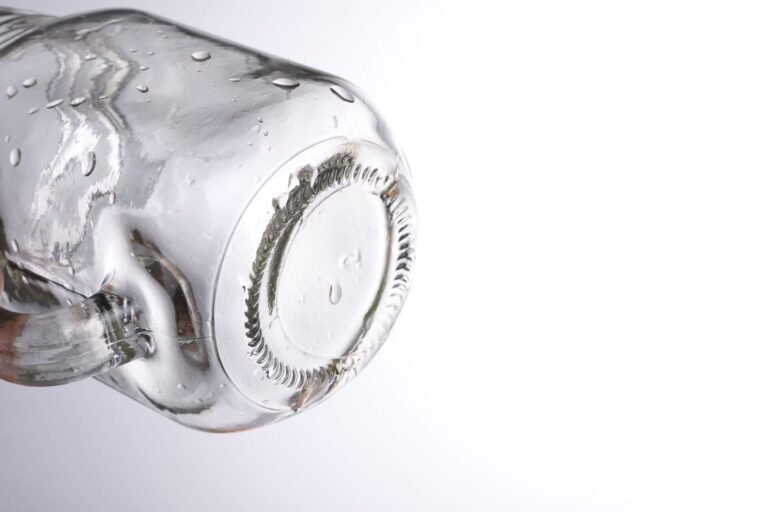
You’ve seen it before. You grab a jar of high-end honey or a jar of artisan pickles. You twist the lid, hear that satisfying pop of the vacuum, and lift the cap. But instead of a clean rim, you see a mess.

Half of the colorful rubber liner (the gasket) is still stuck to the glass. Or worse, it’s torn, leaving jagged little bits of red or white plastic clinging to the rim like a bad memory.

At XUZHOU TROY, we call this Gasket Adhesion (or “Clinging”), and it’s a silent brand killer. To a customer, it doesn’t just look messy—it looks unhygienic. They start wondering, “Is that rubber in my food? Is this jar even safe?”

Why Does the Liner "Cling"?

You’d think a lid is just a lid, but the “rubber” ring inside (the plastisol) is a sensitive chemical compound. The “Sticky Sabotage” usually happens because of a mistake in the factory’s oven.

When the liquid plastisol is flowed into the lid, it has to be “cured” in a massive oven.

  • The “Under-Baked” Disaster: If the oven is a few degrees too cool or the belt moves too fast, the gasket doesn’t fully set. It stays slightly tacky.

  • The “Hot-Fill” Trap: When you fill that jar with hot sauce or jam, the heat “re-activates” that tacky rubber. By the time the jar reaches the customer six months later, the gasket and the glass have practically become one.

The "Peel Test" (The Pro’s Secret)

If you’re a buyer, you shouldn’t have to wait for a customer to complain. You can spot a “Clinger” with the Peel Test.

Take a sample lid (before it’s ever been on a jar). Use your fingernail or a small screwdriver to try and peel the gasket out of the metal channel.

  • A high-quality lid from XUZHOU TROY will feel like a solid, singular piece of tough rubber. It will resist peeling, and if it does come out, it will come out in one clean, stretchy piece.

  • A “Clinger” lid will feel soft or “pasty.” It might even leave a greasy residue on your finger. If it feels like a soft eraser, it’s going to stick to your glass.

3. The Wide-Mouth Advantage: Infusions and "Fixins"

Moonshine is rarely just “straight” anymore. The modern craft movement loves “Apple Pie,” “Peach,” and “Blackberry” moonshine.

  • Easy Loading: The wide-mouth Mason jar (86mm) is the only vessel that allows a distiller to drop in whole cinnamon sticks, large slices of fruit, or vanilla beans easily.

  • Extraction: It also makes it easy for the consumer to get those alcohol-soaked fruit pieces out once the jar is empty!

Why We Obsess Over the "Bake"

At XUZHOU TROY, we treat our gasket curing like a world-class bakery. We don’t just “turn on the oven.” We monitor the temperature at three different points in the heating tunnel. We ensure that every lid gets the exact “dwell time” needed to turn that liquid plastisol into a tough, resilient, non-stick seal.

We also use Advanced Release Agents in our formula—microscopic lubricants that ensure the lid stays sealed tight against air, but lets go of the glass the second the vacuum is broken.

Authenticity You Can Hold

The unboxing experience doesn’t end when the customer takes the jar out of the bag; it ends when they successfully open it. If they have to scrape rubber off the glass before they can eat, you’ve lost the “premium” battle.

Tired of “Sticky Rims” and customer complaints? We hear you. At XUZHOU TROY, we make sure our lids know when to hold on and when to let go. Let’s get you some samples that actually pass the Peel Test.

CONTACT OUR TEAM >>