Our Location
304 North Cardinal St.
Dorchester Center, MA 02124
The "rubber ring" inside your lid is a masterpiece of chemistry. We explore "The Squish Factor"—explaining how gasket hardness affects vacuum retention, why oily foods need special liners, and how XUZHOU TROY ensures lid-to-glass compatibility.
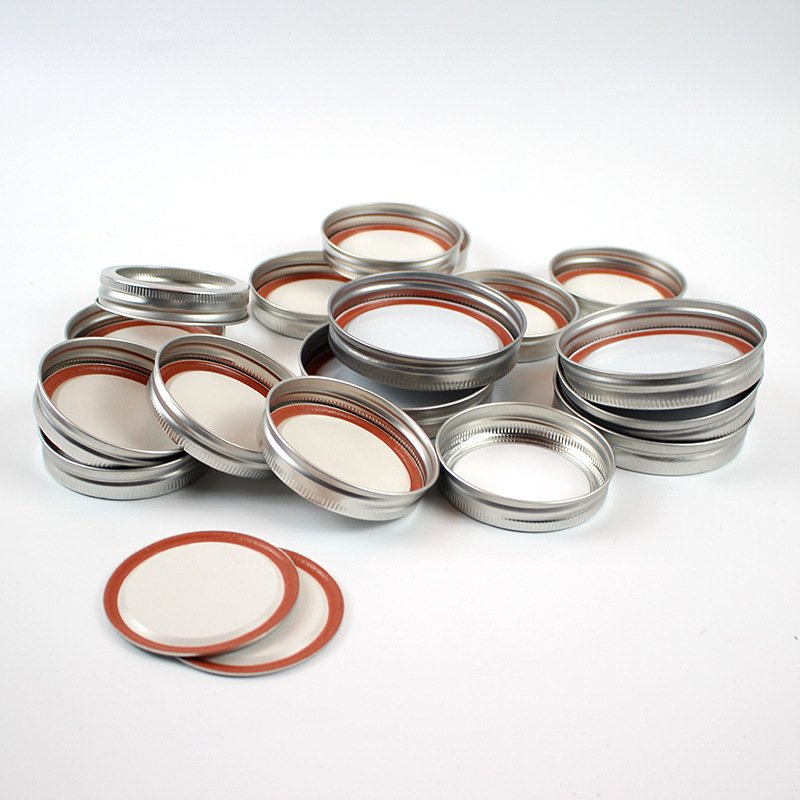
When you look at the underside of a Mason jar lid, you see a ring of colorful material—usually red, white, or blue. This is the Plastisol Gasket. While it may look like simple rubber, it is a highly engineered compound. For B2B buyers in the food industry, the most critical specification of this gasket is its Durometer—the measure of its hardness and “squishiness.”
At XUZHOU TROY, we know that the wrong gasket hardness can lead to “seal creep,” oxidation, or total vacuum failure. Here is why understanding the “Squish Factor” is vital for your packaging success.
Durometer refers to the resistance of the plastisol to indentation. In the world of glass closures, we typically measure this on the Shore A scale.
The Soft Gasket: A softer gasket conforms easily to minor imperfections on the glass rim. It is excellent for “Cold-Fill” products where there is no heat to help the material soften.
The Hard Gasket: A firmer gasket is required for “Hot-Fill” and “Retort” processing. If the gasket is too soft when heated to 121°C (250°F), the internal pressure can push the material out of the channel, causing a “blowout.”
For long-term shelf stability (12–24 months), the gasket must maintain its Resilience.
The Memory of Glass: Once a lid is torqued onto a XUZHOU TROY jar, the glass rim creates a permanent “track” in the gasket.
The Risk: If the plastisol has a poor “Compression Set” (meaning it loses its springiness), it will eventually flatten out completely. As the metal lid expands and contracts with seasonal temperature changes, a flattened gasket can no longer “push back” against the glass, allowing microscopic amounts of oxygen to leak in.
Not all gaskets are created equal when they meet food.
The “Oil Migration” Issue: If you are packaging oily products like pesto, sundried tomatoes, or oil-based skincare, you need a high-durometer, oil-resistant plastisol. Standard gaskets can absorb oils, causing them to swell and soften. This “softening” weakens the mechanical seal, often leading to oil leaking down the side of the jar.
The TROY Standard: We offer specialized liners designed for high-acid (vinegar-based) and high-oil environments, ensuring the gasket remains chemically stable for the life of the product.
There is a direct mathematical relationship between how hard you twist a lid (Torque) and how hard the gasket is.
Automated Capping: If your capping machine is set to a high torque but you are using a soft gasket, you may “cut” through the liner down to the metal, causing the lid to rust from the inside out.
The Solution: At XUZHOU TROY, we coordinate with our clients to match the Lid Torque Specifications to the Gasket Durometer, ensuring a “Deep Seat” seal that doesn’t damage the material.
At our Xuzhou facility, we don’t just supply jars; we supply “Sealing Systems.” We ensure that:
Gasket Centering: The plastisol is flowed perfectly into the center of the lid channel so it hits our precision glass rims every time.
BPA-Free Compliance: All our gaskets are phthalate-free and BPA-free, meeting the strictest FDA and EU food-safety requirements.
Vacuum-Tested Performance: Our lids are tested for “pull-down” strength to ensure the gasket creates a reliable vacuum “pop” for the end consumer.
The lid is the gatekeeper of your product’s safety, and the gasket is the lock. By selecting the correct durometer and material for your specific food type and processing temperature, you ensure that your brand’s quality remains “locked in” until the moment it is opened.
Are you experiencing “mystery leaks” in your oily or high-acid products? The problem might be your gasket hardness. Contact XUZHOU TROY today for a technical audit of your lid and liner specifications.
CONTACT OUR TEAM >>