Our Location
304 North Cardinal St.
Dorchester Center, MA 02124
Why isn't the bottom of a Mason jar flat? We explore the hidden physics of the "Concave Base"—explaining how this inward curve prevents the "wobble," manages extreme vacuum pressure, and protects the glass from thermal shock during hot-filling.
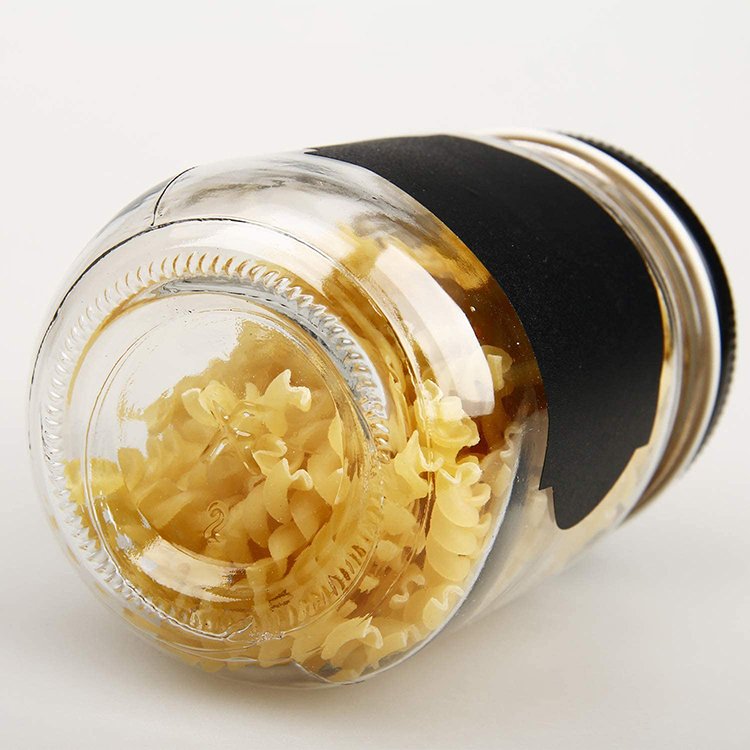
If you turn over a professional-grade Mason jar from XUZHOU TROY, you will notice that the center of the base is not flat; it curves slightly inward toward the center of the jar. In the glass industry, this feature is known as the “Push-up” or “Concave Base.”
While it might seem like a way to save glass, the concave base is actually a sophisticated engineering solution to three major challenges: Physical Stability, Vacuum Pressure Management, and Thermal Stress.
In glass manufacturing, it is nearly impossible to create a perfectly, microscopically flat surface over a large area. As glass cools, it naturally contracts. If a jar base were designed to be flat, any tiny bulge in the center would turn the jar into a “rocker,” making it unstable on a shelf or a high-speed conveyor belt.
The TROY Solution: By engineering a concave “push-up,” we move the contact area to the outer edge of the base (the bearing surface). This ensures the jar sits on a stable “ring,” providing a firm, wobble-free foundation even on slightly uneven surfaces.
Mason jars are primarily used for vacuum sealing. When a jar is processed and then cooled, the internal vacuum creates a powerful downward pull on the lid and an upward pull on the base.
Structural Arches: Just as an arch in a bridge can support massive weight, the concave arch of the jar base is mathematically stronger than a flat surface. It resists the “sucking” force of the vacuum without deforming or cracking.
Pressure Distribution: Without this curve, the constant tension of a vacuum seal could cause the bottom of the jar to become a “fatigued” point, eventually leading to a spontaneous failure (a “drop-out” bottom).
During the manufacturing process in our Xuzhou facility, the glass is at its thickest at the base. This area retains heat longer than the walls.
Controlled Cooling: A concave design allows the glass to cool more uniformly. It manages the “settle wave”—the way molten glass settles into the mold—ensuring that the thickness of the base is distributed evenly.
Thermal Shock Resistance: When you pour boiling liquid into a jar, the base expands. A concave base allows the glass to expand slightly inward into the “push-up” area, reducing the outward tension on the “heel” (the corner where the base meets the wall), which is the most common break-point in low-quality jars.
For our partners in the Kombucha, Cold-Brew, and Craft Cider industries, the concave base serves a functional secondary purpose.
Natural Filtration: As natural sediments or yeasts settle out of the liquid, the “push-up” encourages them to gather in the deeper ring around the edge of the base. This allows the consumer to pour out a clearer product, as the sediment is less likely to be disturbed compared to a flat-bottomed container.
At XUZHOU TROY, we calibrate the “depth” of the concave base for every jar size.
Too shallow: The jar risks becoming a “rocker” if it expands during hot-filling.
Too deep: You lose valuable “Label Capacity” and make the jar harder for consumers to clean.
Our engineering team ensures the “Golden Ratio” of base concavity—maximizing stability and strength while maintaining the easy-to-clean interior that Mason jar users love.
A Mason jar from XUZHOU TROY is a product of deliberate geometry. From the rim to the push-up at the base, every curve is designed to handle the pressures of the modern food and beverage industry. When you choose our jars, you aren’t just buying glass; you are buying an engineered system of stability.
Does your current glass supplier provide technical drawings of their base geometry? Ensure your inventory stays stable and safe with XUZHOU TROY. Contact us today for a technical consultation.
CONTACT OUR TEAM >>