Our Location
Xuzhou, Jiangsu, China

Not all Mason jars are created equal. The shape of your jar impacts strength, freezer safety, space efficiency, and cleaning. Our guide helps you choose the perfect round, tapered, or square jar for your needs.
When you think of a classic Mason jar, the iconic cylindrical shape likely comes to mind. But walk into any kitchenware store today, and you’ll find an array of shapes—from sleek tapered designs to space-saving square jars.
These shapes aren’t just about aesthetics. The geometry of a glass jar fundamentally impacts its structural strength, freezer safety, storage efficiency, and even how easy it is to clean.
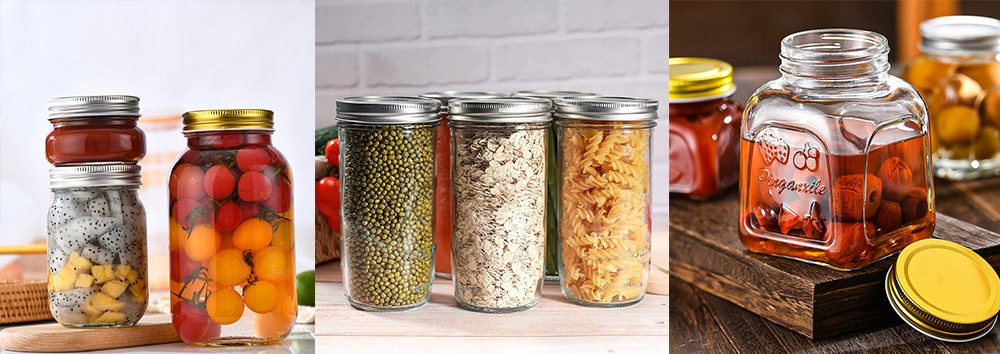
In this comprehensive guide, we break down the differences between Round, Tapered (including straight-sided wide-mouth), and Square Mason jars to help you choose the perfect vessel for your specific needs—whether you’re a home canner, a meal prep enthusiast, or an organization lover.
| Feature | Round | Tapered / Straight-Sided | Square |
|---|---|---|---|
| Structural Strength | Excellent. Curved surfaces distribute pressure evenly; best for high-heat canning. | Good. Stable with wide base; less likely to tip over. | Moderate. Corners are stress points; more vulnerable to impacts and temperature shock. |
| Space Efficiency | Fair. Gaps between jars waste shelf space. | Good. Better than round, though not as tight as square. | Excellent. Nest together perfectly; maximizes pantry and fridge space. |
| Grip & Handling | Comfortable. Ergonomic curve fits naturally in the hand. | Excellent. Tapered design is easy to grip, even when wet. | Angular. Can feel boxy; less comfortable for frequent handling. |
| Clarity / Visibility | Excellent. Minimal distortion; crystal-clear view of contents. | Good. Clear glass with attractive light refraction. | Fair. Flat panels can slightly distort the view through corners. |
| Freezer Safety | Moderate. Shouldered round jars risk cracking from expansion. | Excellent. No shoulders allow ice to expand upward safely. | Low. Corner stress points make freezing risky. |
| Ease of Cleaning | Easiest. Smooth, curved surfaces; no死角 (hidden corners). | Easy. Wide mouth allows hand access; smooth interior. | Moderate. Bottom corners trap residue; require brush for thorough cleaning. |
| Labeling | Fair. Curved surface causes bubbles/wrinkles in labels. | Fair. Same as round. | Excellent. Flat sides allow labels to adhere smoothly. |
| Best Use Cases | The All-Rounder: Canning, preserving, beverages, dry storage. | The Specialist: Freezing, honey/jams, wide-mouth recipes. | The Organizer: Pantry storage, spices, coffee beans, retail display. |
The round Mason jar is the original classic, and for good reason: physics is on its side.
Superior Strength for Canning: When you’re processing jars in a boiling water bath or pressure canner, the round shape excels. The curved surface distributes internal pressure evenly across the entire jar, making it the safest choice for high-heat preserving. It withstands temperature differentials better than any other shape.
Better Heat Circulation: During heating, liquids in a round jar create more uniform convection currents, ensuring your pickles or jams are heated thoroughly.
The Freezing Caveat: While round jars are kings of heat, they are not ideal for freezing. If your round jar has pronounced “shoulders” (the curve where the body meets the neck), expanding ice can get trapped and exert pressure on that point, leading to cracks. For freezing, look for shoulderless designs.
These jars often feature a wide mouth and straight sides or a gentle taper, with little to no shoulder.
Freezer Safe (The #1 Advantage): This is the defining feature of tapered/straight jars. When liquids freeze, they expand by about 9%. In a shoulderless jar, that ice slug simply pushes upward like a piston. There are no shoulders to trap the expanding contents, so the glass doesn’t crack. If you plan to freeze broths, sauces, or fruits, this is your jar.
Easy Access: The wide mouth isn’t just for show. It allows you to reach inside with your hand or a spoon, and it lets solid contents (like whole pickles or a slice of cake) slide out effortlessly without getting stuck.
Drawbacks: These jars can sometimes feel less “vintage” than their round-shouldered cousins, and very tall, narrow ones might be slightly less stable.
Square Mason jars have surged in popularity thanks to the modern obsession with organized, Instagram-worthy pantries.
Maximizing Every Inch: This is the square jar’s superpower. They can be lined up flush against each other, eliminating the wasted gaps that come with round jars. For tight shelves, drawers, or refrigerators, square jars are unbeatable.
Labeling Perfection: Need to label your jars for a market or a meticulously organized pantry? The flat surfaces of a square jar accept labels perfectly—no wrinkles, no bubbles.
Anti-Roll: Knock one over on the counter? A square jar will stay put, not roll off the edge and shatter.
The Cleaning Challenge: The bottom corners of square jars are notorious for trapping food debris—think thick sauces, fermented batters, or coffee grounds. You’ll likely need a corner brush to get them truly clean.
Structural Weakness: Those useful 90-degree corners are also stress concentrators. If dropped or subjected to rapid temperature changes, a square jar is more likely to crack at a corner than a round jar is along its smooth curve.
Still unsure? Here’s a simple cheat sheet:
For Canning & Preserving (High Heat):
Choose Round. Its superior pressure distribution makes it the safest option for boiling water and pressure canners.
For Freezing Broths, Meats, or Leftovers:
Choose Tapered/Straight-Sided (Wide Mouth). This shape is specifically designed to handle ice expansion without cracking.
For Drinking Glasses, Honey, or Syrups:
Choose Tapered. The ergonomic grip feels great in the hand, and wide/narrow mouths help control pouring.
For Pantry Organization & Shelf Display:
Choose Square. They maximize space and look incredibly neat and uniform. Just keep a bottle brush handy for cleaning the corners.
For Showcasing Beautiful Ingredients (e.g., infused spirits, colorful baking supplies):
Choose Round or Tapered. Their clarity and light refraction often make colorful contents look more appealing than square jars do.
CONTACT OUR TEAM >>